
We Develop: A Recipe for Success in Streamlining Work
The restaurant industry is constantly changing. Staff shortages, profitability challenges, and changing customer needs have put pressure on the industry, but at the same time, they have opened up new opportunities: opportunities to make restaurant work smarter, smoother, and more human.
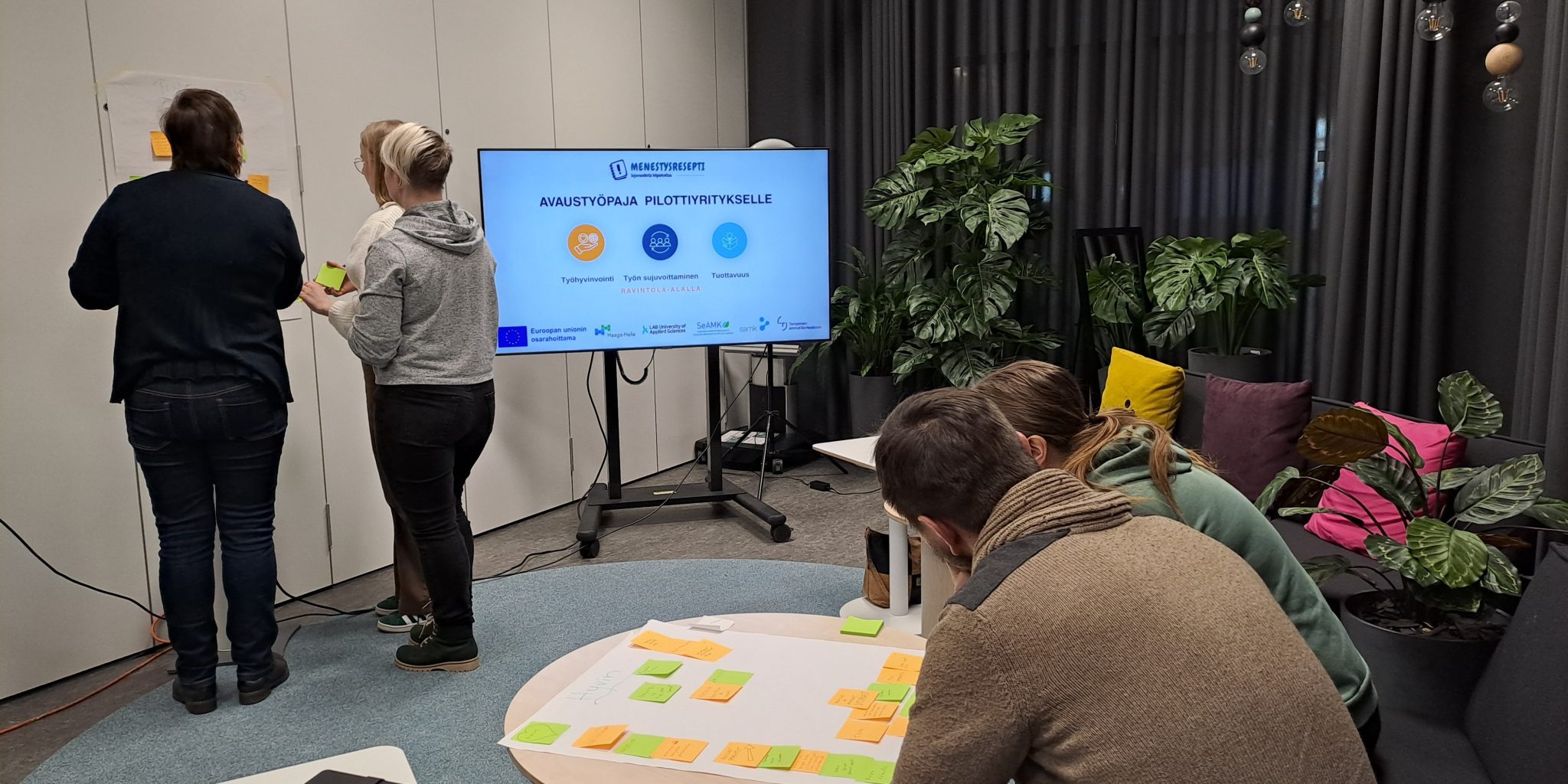
The aim of the Recipe for Success project is to find and implement practices that improve work efficiency, productivity, and well-being at work. Interviews and surveys conducted in the early stages of the project in restaurant companies highlighted areas for development that affect both well-being at work and business operations. This article discusses a few key themes that emerged in several companies: induction and skills development, improving workflow, and staff participation and joint development. What these themes have in common is that they all require a developmental approach, practical experimentation, collaborative learning, and the participation of the entire team.
Orientation is the foundation of smooth work
In many restaurants, orientation has traditionally been "learning by doing." This is effective, but only if the basics of the job, responsibilities, and rules are clear to everyone. Interviews revealed, for example, the need to build induction into a systematic and continuous process that ensures quality and supports smooth workflows.
In the Recipe for Success project, orientation and skills development are reinforced through experiments and workshops, and later also through change agent training. Restaurants can test, for example, digital induction materials and new work guidance practices. The aim is to create a model that also works in busy environments, so that new employees can easily get involved in the work and the work community and feel welcome.
A good working day is built on smooth workflows
In interviews, smooth workflows emerged as another significant area for development. Everyday life in a restaurant is often fast-paced and unpredictable, which means that clear processes, smooth work organization, and effective tools are crucial. The root causes of work overload were often the same: unclear responsibilities, communication breakdowns, changing situations, and the unpredictability of customer numbers.
As part of the Recipe for Success project, various workshops related to smooth operations were organized, introducing participants to digital tools and automation for improving restaurant efficiency. Among other things, reservation systems, order management, and kitchen technologies that streamline processes and improve the customer experience were examined. In addition, companies have begun trials to clarify the division of labor, for example. The goal is not to purchase the "best model" from outside, but to find a solution that suits the company's own operations and streamlines everyday work. When work flows more smoothly, it is reflected in both well-being at work and customer experience.
Participation makes change permanent
The third significant theme in development is employee participation. Without it, development easily remains the responsibility of management or individual supervisors, in which case change does not become
part of everyday life and work. This can also lead to resistance to change. In the Recipe for Success project, participation is strengthened through co-development workshops, where everyday challenges are discussed and solutions are sought together. The workshops are places where new things are tried out and learned together as part of everyday work. A participatory culture also supports psychological safety: employees dare to present ideas, talk about problems, and suggest improvements. When the culture of discussion is strengthened, both the working atmosphere and the quality of service improve. At the same time, employees become more committed, motivated, and their well-being at work improves.
Change comes from small, repeated experiments. Development is a process that requires time, space, and the courage to do things differently. One of the project's biggest measures aimed at improving work flow, well-being at work, and productivity is the change agent training program, which will soon be launched. It will provide work communities with new insights and, through them, tools to guide change from within. The training program will train individuals in work communities to identify everyday bottlenecks and drive development work forward. After the pilot phase, the change agent training materials will be available to everyone. This will enable restaurants to take the next steps towards a more profitable, smoother, and more humane work culture.


The Recipe for Success project is co-funded by the European Union.