
Satakunta Region on the German Travel Map: Themed Tours Unlock New Opportunities
This article examines how the Satakunta region in Finland can attract German tourists through carefully designed themed tours. It explores current market trends, traveller preferences, and how collaboration between local businesses can create coherent and appealing travel experiences. The focus is on combining cultural, natural, and coastal attractions into products that meet the growing demand from Germany while strengthening Satakunta’s international visibility.
Germany Rises as Finland’s Top Market
Germany is now leading Finland’s international tourism, and the numbers speak for themselves. Germany has become Finland’s most important international tourism market, particularly after Russia’s invasion of Ukraine in 2022, which practically halted tourism from Russia to Finland and significantly changed the structure of Finland’s tourism market. In 2025, German visitors accounted for over 770,000 registered overnight stays, making them the largest foreign visitor group (Visit Finland, 2026). Non-traditional accommodation, such as Airbnb, is not included, so the actual number is even higher.
A Huge Untapped Opportunity
Millions of Germans are considering a trip to Finland—but only a fraction have actually visited so far (Sonntag & Braun, 2024). According to Reiseanalyse 2024, around 3.5 million Germans are planning or contemplating a visit in the near future. Yet Finland captures only 7% of German travel to the Nordic countries (NordicMarketing Finland, 2025). This gap represents both a challenge and a huge opportunity in a competitive market.
What German Travellers Are Looking For
Authenticity, nature, and local culture are the top draws for German tourists (Sonntag & Braun, 2024). Through regional development collaboration, tourism actors in the Satakunta region have identified lifestyle travellers and nature lovers as the most promising international segments. While Visit Finland defines several key visitor segments, the region has chosen to focus on these two as particularly relevant to Satakunta’s offerings (Visit Finland, 2023).
Lifestyle travellers seek authentic cultural experiences, local cuisine, design, and personal encounters with local communities. Nature lovers prefer peaceful natural landscapes, outdoor exploration, and scenic beauty without intensive athletic demands.
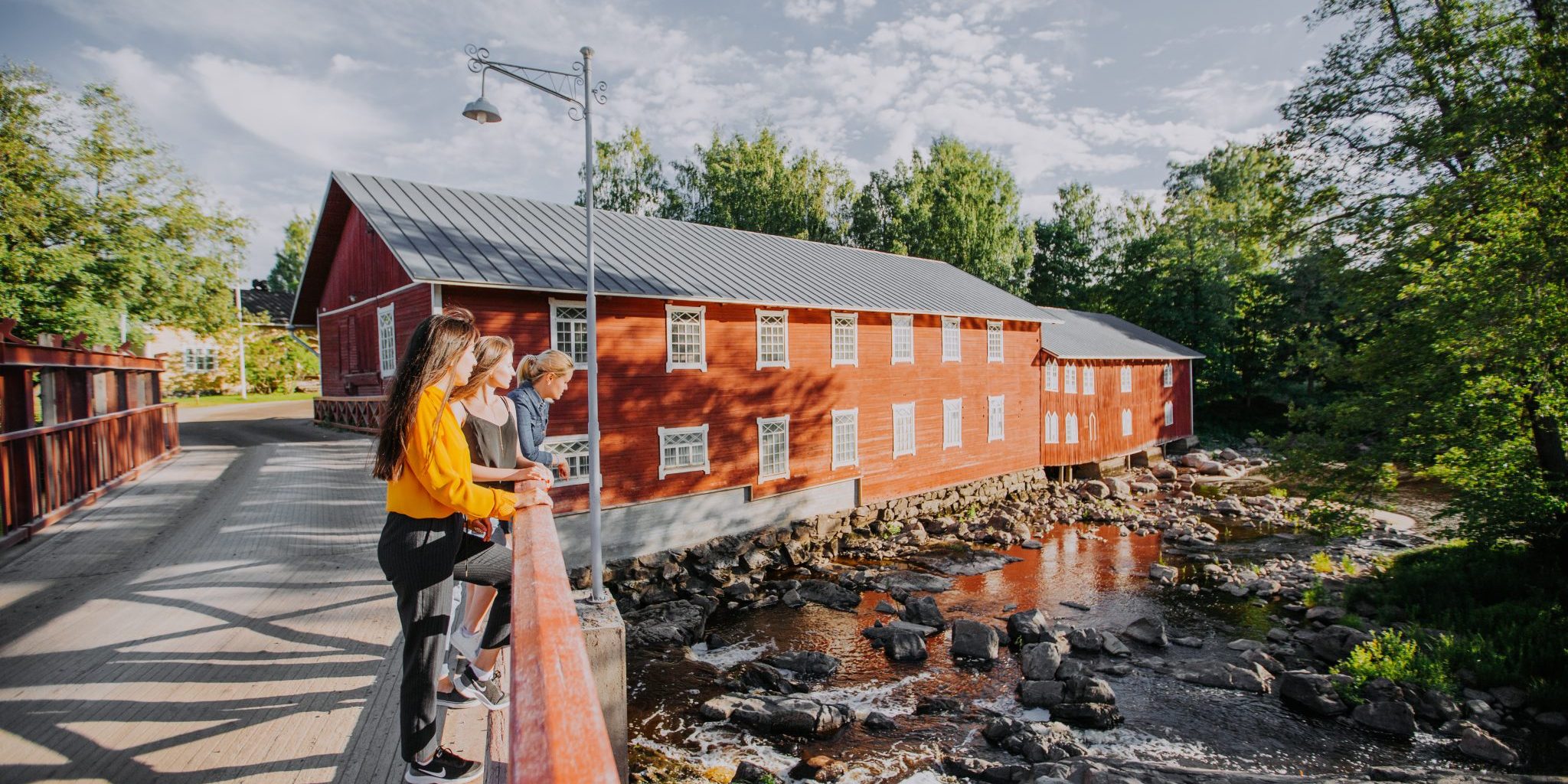
The Satakunta region perfectly matches these expectations. Visitors can experience a combination of coastal landscapes, archipelagos, historic towns, and cultural heritage. In collaboration, Satakunta region tourism actors have defined a set of key attractions that best represent the area. These include UNESCO World Heritage sites, historic ironworks villages, Alvar Aalto architecture, the Bothnian Sea National Park, as well as historic lighthouses, the Lauhanvuori–Hämeenkangas UNESCO Global Geopark, and the Yyteri dunes.
Tours: Explore the Region with Ease
Tours are an increasingly popular way to experience regions in a cohesive way, as visitors often stay several days and visit multiple destinations, experiencing the region as a whole rather than as individual attractions (Novelli, Schmitz & Spencer, 2006). Many German visitors to Scandinavia spend over two weeks in the region, and a significant share travel by car (Sonntag & Braun, 2024), making self-driving tours an attractive option.
The Satakunta region’s tourism actors have collaboratively developed three one-week themed self-driving tours, focusing on culture, nature, and coastal lifestyle. The cultural tour takes visitors through historic towns, ironworks villages, and showcases Alvar Aalto architecture. The nature tour highlights national parks, Lauhanvuori–Hämeenkangas UNESCO Global Geopark, and distinctive landscapes such as the Yyteri dunes. The coastal lifestyle tour introduces visitors to the Bothnian Sea, archipelagos, lighthouses, and authentic seaside experiences.
These tours have been compiled into a comprehensive product manual for international tour operators, the first of its kind to bring together the entire Satakunta region’s tourism offerings suitable for international visitors. Germany remains a traditional tourism market, where many travellers plan trips directly with tour operators or are inspired indirectly through travel agencies’ materials and marketing. This underlines the importance of well-structured, clearly presented routes for reaching the market effectively (Sonntag & Braun, 2024). The tours will be showcased to German tour operators in spring 2026 through a targeted newsletter campaign and virtual meetings, highlighting the region’s offerings and fostering collaboration with international partners.
Collaboration: Strength in Numbers
Tourism works best when businesses work together. Tourism experiences rarely come from a single provider. Networks of businesses and organisations create complete, seamless experiences that attract international visitors. Collaboration increases product quality, visibility, and competitiveness (Lemmetyinen & Go, 2009; Hall, Müller & Saarinen, 2008). A survey of tourism entrepreneurs in the Satakunta region indicates strong interest in developing joint products, highlighting enthusiasm for collaboration and collective offerings. Such collaboration not only strengthens relationships between local providers but also helps present the region as a more attractive and cohesive destination to international visitors.
Growing Satakunta Region on the International Stage
With the right approach, Satakunta can become a must-visit destination for German travellers. The themed tours make the region easy to understand and market, particularly to German travellers seeking authentic, multi-day experiences. Continuous product development, deeper cooperation, and targeted promotion—especially in Germany—will help Satakunta convert potential into real growth and establish a strong international profile.
References
Hall, C. M., Müller, D. K., & Saarinen, J. (2008). Nordic tourism: Issues and cases. Channel View Publications.
Lemmetyinen, A., & Go, F. (2009). The key capabilities required for managing tourism business networks. Tourism Management, 30(1), 31–40. https://doi.org/10.1016/j.tourman.2008.04.005
Novelli, M., Schmitz, B., & Spencer, T. (2006). Networks, clusters and innovation in tourism. Tourism Management, 27(6), 1141–1152. https://doi.org/10.1016/j.tourman.2005.11.011
NordicMarketing Finland. (2025). NM Matkailun aamukahviseura: Reiseanalyse 2024 – Saksalaisten matkailutottumukset ja suomimielikuvan vahvistaminen.
Sonntag, U., & Braun, M. (2024). Reiseanalyse 2024. https://www.visitfinland.fi/globalassets/visitfinland.fi/vf-julkaisut/2024/reiseanalyse-2024-report.pdf
Visit Finland. (2023). Lifestyle traveller. https://www.visitfinland.fi/globalassets/visitfinland.fi/vf-julkaisut/2023/lifestyle-traveller.pdf
Visit Finland. (2023). Nature lover. https://www.visitfinland.fi/globalassets/visitfinland.fi/vf-julkaisut/2023/nature-lover.pdf
Visit Finland. (2026). Rudolf tourism statistics. https://www.visitfinland.fi/suomen-matkailudata/tilastopalvelu-rudolf/